


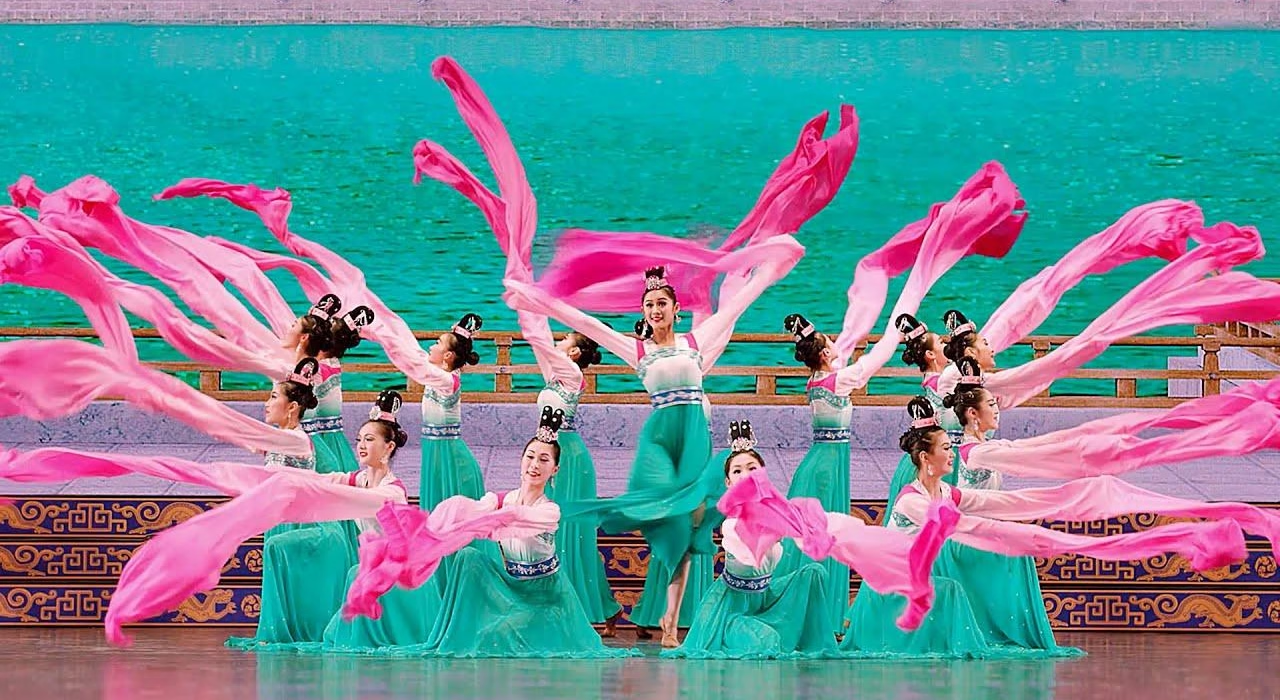
The Han people are by far China’s largest ethnic group. And so just as the Chinese language (yu) is known as Han-yu, Chinese clothing (fu) is known as Han-fu. In reality, though, traditional Chinese clothing has varied greatly from one dynasty to the next.
Hundreds of variations exist in Hanfu. The clothing generally consists of loose gowns, wide sleeves, and flat, open collars folded over to the right. Rather than using buttons or strings, most were kept in place by a sash belt. High hats and wide belts are distinguishing marks of scholars and officials. Hanfu was remarkably versatile and easy to wear.
At the same time, traditional Chinese clothing was serious business. The right clothes gave off an aura of refinement and dignity. It embodied the virtues of Chinese antiquity, and contributed to the culture’s perception of self.
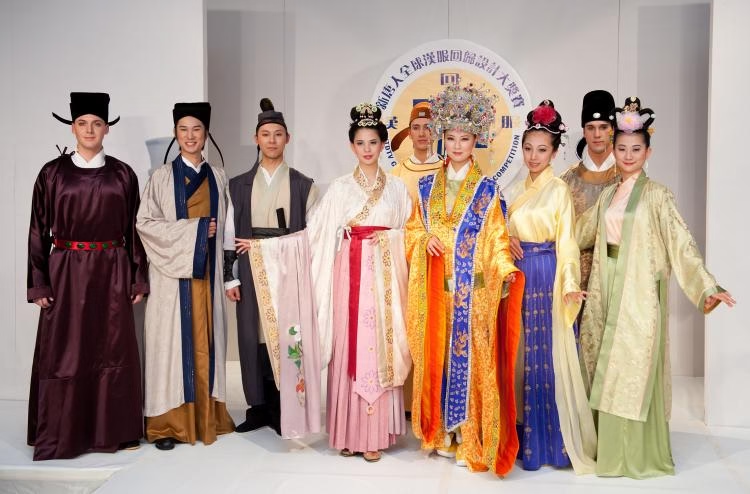
Image: The Epoch Times
In The Book of Changes, or Yijing, a passage praises the three sovereigns—the Yellow Emperor, Yao, and Shun—for “ruling with their arms hanging in their sleeves.” These early rulers valued harmony between heaven and earth. As a result, the country stayed (mostly) peaceful, and they governed without worries, their hands literally tucked away as they watched the years pass.
In another ancient reference, Confucius praises Duke Huan of Qi. Seeing inner-strife threatening to tear the country apart, the Duke convinced other lords to fight against the barbarians instead of each other. He standardized clothing styles in his kingdom and extended the rules to nine other lords, thus uniting them.

Image: Shen Yun Performing Arts
These rules gradually extended to ways of dress, forming a standard for China’s next 3,000 years.
✉️ Stay Connected — Subscribe for Weekly Updates
Discover timeless stories, practical wisdom, and beautiful culture — delivered straight to your inbox.
*We only share valuable insights — no spam, ever.



Anonymous Proxies
Tháng 6 20, 2025I am really thankful to the owner of this web site who has
shared this fantastic piece of writing at here.
Vivian
Tháng 6 20, 2025thank you