


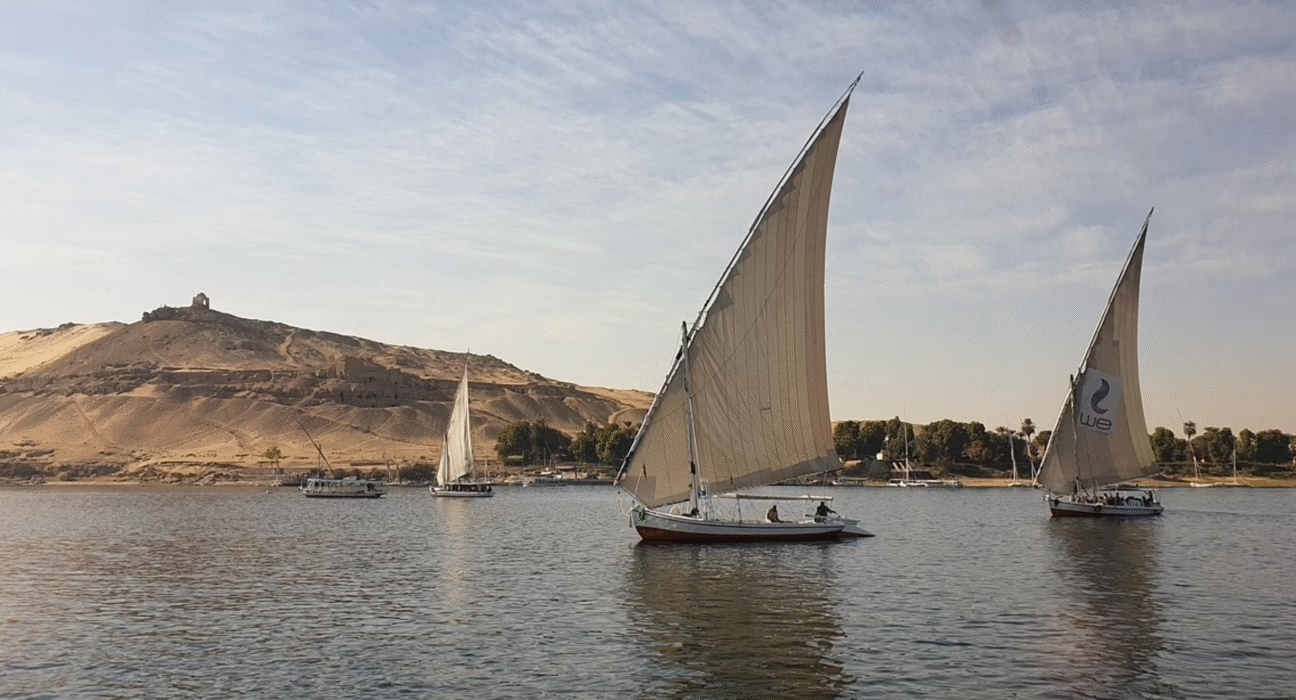
The Egyptian civilization stands as one of the most enduring and captivating legacies of human history. Often dubbed the “River People Who Built for Eternity,” Egyptians have left behind a monumental tapestry of art, architecture, literature, and innovation that continues to fascinate scholars and enthusiasts alike. This blog explores the depths of what makes Egyptians extraordinary—how their intimate relationship with the Nile River shaped their society, beliefs, and technological achievements, creating a civilization that transcends time.
The Lifeblood of Egypt: The Nile River and Its Profound Influence on Egyptian Society
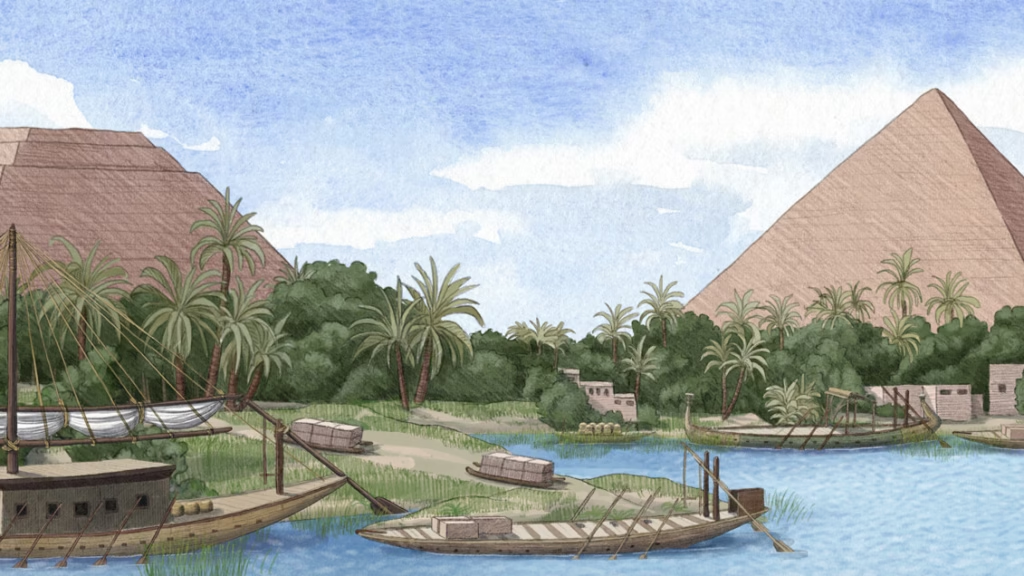
The Nile River is undeniably the artery of Egyptian life, shaping every facet of society from agriculture to spiritual practice. Its annual inundations fertilize the land, sustain crops, and facilitate trade, forming the backbone of Egypt’s prosperity. But beyond its economic significance, the Nile also embodies the spiritual heart of the Egyptians, who believed it to be a divine gift and a symbol of life itself.
In understanding Egyptians: The River People Who Built for Eternity, one must first appreciate how the Nile dictated the rhythm of daily life, societal structure, and religious practices. The Nile’s predictable floods allowed ancient Egyptians to develop a calendar and agricultural system unparalleled in the ancient world. The river’s significance extends beyond the physical — it acted as a divine conduit, linking them to the gods and the afterlife.
The Nile’s Annual Cycle and Agricultural Innovations
The seasonal flooding of the Nile was a marvel of natural engineering, enabling Egyptian farmers to cultivate crops with extraordinary predictability. Before the advent of sophisticated irrigation systems, the Egyptians relied on this cycle to plan their planting and harvesting, which in turn supported a dense, thriving population. Egyptian farmers watched the stars and the river’s rise meticulously, recognizing the divine order embedded in nature.
This cycle prompted innovations in water management and land measurement that were impressive for their time. The Egyptians developed basin irrigation and constructed channels to control the flow of water, ensuring that no season went to waste. These advancements reflect an early understanding of sustainable resource management—an ancient form of ecological stewardship that allowed the civilization to flourish for thousands of years.
Beyond the practical, the Nile’s cycle also deepened the Egyptians’ spiritual understanding. They saw the annual flood as a divine resurrection, a symbol of rebirth and renewal. This belief was woven into their religion, influencing everything from their mythologies to funeral rites, because to the Egyptians, life was a continuous cycle of death and rebirth akin to the Nile’s own life-giving flood.
The Nile as a Divine and Cultural Symbol
The Nile transcended its physical boundaries across all facets of life; it was a divine thread linking humans, gods, and the cosmos. The Egyptians believed that the annual flooding was orchestrated by the gods, particularly Osiris, who governed fertility, death, and rebirth.
This divine association extended to their architecture and art, which frequently depicted the Nile as a life-giving force. Temples and tombs were aligned with celestial events and the river’s cycles, underscoring the sacred importance of water in their cosmology. The Nile’s eternal flow became a symbol of stability and divine order, fostering a sense of security and permanence among Egyptians that would endure across millennia.
Furthermore, the Nile supported the development of a centralized government capable of coordinating massive projects like canal building, irrigation, and religious monument construction. It was a unifying force that prompted the Egyptians to see themselves as part of a divine order—champions of a civilization built upon harmony with nature.
Architectural Marvels and Monumental Expressions of Eternal Power

One cannot discuss Egyptians: The River People Who Built for Eternity without acknowledging their awe-inspiring architecture. Their masterful use of stone, geometry, and symbolism resulted in structures that have transcended time, embodying their spiritual values and political authority. The pyramids, temples, and tombs reflect an obsession with eternity and demonstrate their mastery of engineering and artistic expression.
The grandeur of their architecture was no accident but a deliberate act of cultural expression, intended to ensure their legacy would last forever. These monuments served as both spiritual gateways and political statements: eternal symbols of divine authority and cosmic order, designed to withstand the ravages of time and testaments to their mastery of engineering.
The Pyramids: Miracles of Engineering and Spiritual Aspiration
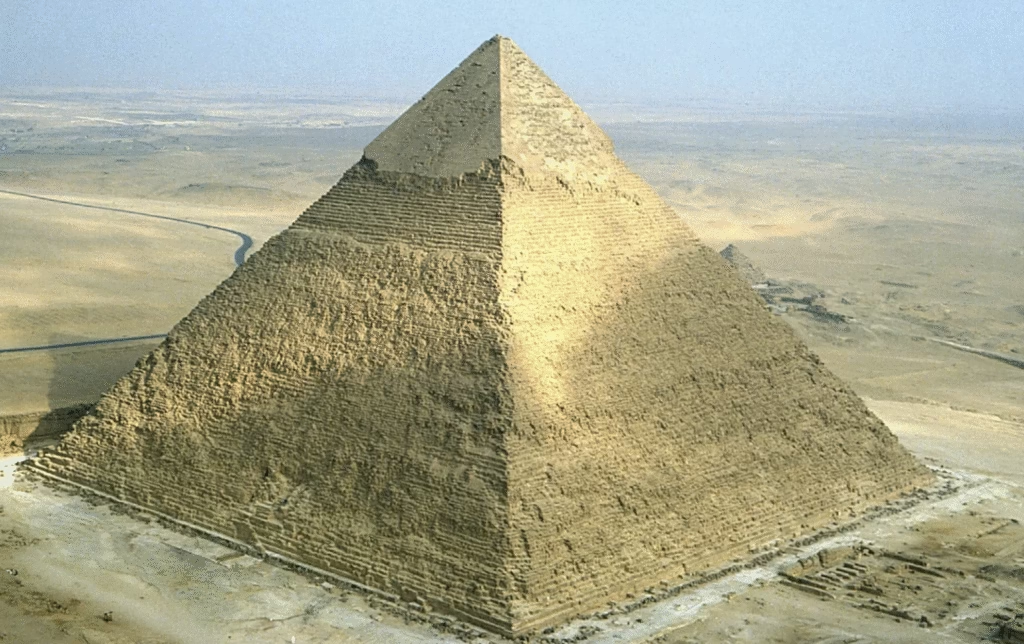
The pyramids—most famously, the Great Pyramid of Giza—are quintessential symbols of Egyptian ingenuity and their desire to achieve everlasting life. Built as tombs for pharaohs, these structures were more than mere burial sites; they functioned as spiritual portals, facilitating the ascent of the soul into the divine realm and ensuring their memory endured eternally.
Constructing such monumental structures demanded extraordinary organizational skills, a deep understanding of mathematics, and an unwavering religious devotion. Each stone was perfectly cut and aligned with the cardinal points, showcasing advanced knowledge of astronomy and geometry. The scale and precision of the pyramids forge a connection between architecture and the divine, demonstrating Egyptians’ desire to transcend mortal life.
The orientation and construction techniques of the pyramids reveal their underlying philosophical belief that humans could align themselves with divine cosmic principles. The pyramids communicate a profound understanding of eternity, illustrating that Egyptians built not just for their pharaohs but for their souls to continue existing in harmony with the universe.
Temples and Sacred Architecture
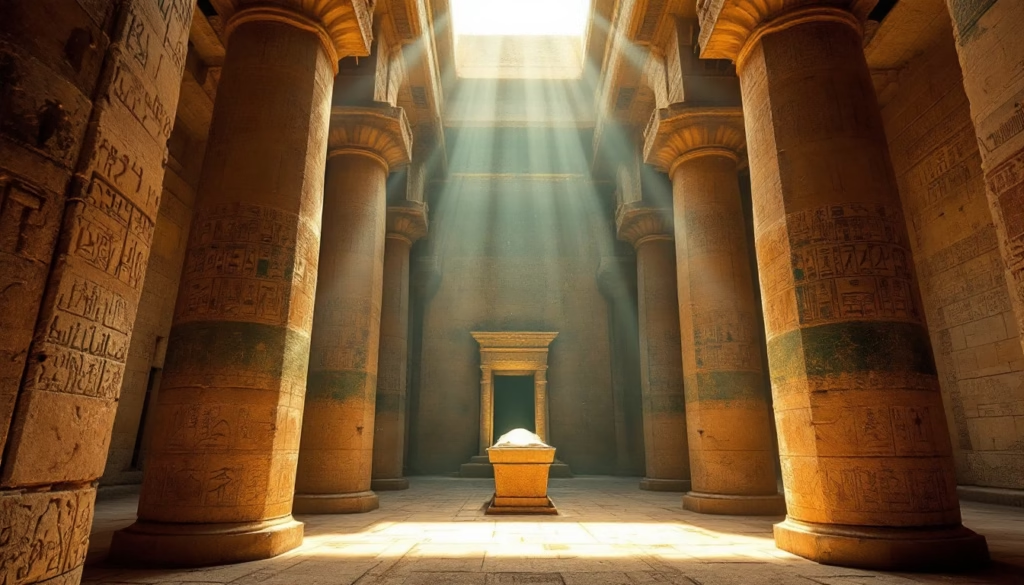
Beyond the pyramids, Egypt’s temples served as physical representations of divine power and cosmic order. Temples like Karnak and Luxor were intricately decorated with hieroglyphs, reliefs, and statuary that narrated divine narratives and royal achievements. Their purpose extended beyond worship; temples functioned as political centers and repositories of knowledge.
The architecture of these religious complexes was carefully designed to impress and inspire. Hypostyle halls, massive pylons, and towering obelisks directed attention upward, symbolizing the connection between heaven and earth. The orientation of temples aligned with celestial phenomena, reinforcing their spiritual significance and their role in maintaining maat—the divine order of the universe.
Constructing these sacred places was an act of devotion, and every stone was imbued with religious symbolism. Egyptians believed that through their monumental architecture, they established a lasting legacy that would serve as a bridge between mortals and the divine, ensuring their civilization’s immortality.
Tombs and Rituals for Eternal Life
Tomb architecture, from mastabas to elaborate rock-cut tombs in the Valley of the Kings, illustrates the Egyptian obsession with eternal life. Elaborate burial rituals and funerary texts like the Book of the Dead reveal their quest to secure a resurrection experience amid the afterlife.
The tombs were designed with intricate corridors, chambers, and symbolic decorations meant to guide and protect the soul during its journey. The concept of ka—an element of a person’s spiritual essence—was central to Egyptian beliefs about the afterlife, and their architecture aimed to preserve this vital component for eternity.
By meticulously designing mortuary spaces and inscribing spells and prayers, Egyptians demonstrated their unwavering focus on immortality. Their collective effort to build structures that would last for eternity encapsulates the essence of Egyptians: The River People Who Built for Eternity—a civilization committed to leaving an indelible mark on the fabric of time itself.
The Cultural and Religious Foundations of Egyptian Society
Egyptians’ spiritual worldview was intricately connected with their understanding of the cosmos, which in turn influenced their laws, education, and daily life. Their religion was not a set of isolated beliefs but a comprehensive worldview that integrated nature, morality, and governance.
At the heart of Egyptian spirituality was a complex pantheon of gods, and their mythologies provided explanations for natural phenomena, societal order, and the afterlife. The gods represented forces of nature and virtues, anchoring Egyptian civilization in a divine moral universe that fostered stability and continuity.
Religion as a Foundation for Governance
Religion played a central role in legitimizing political authority. Pharaohs were seen as divine representatives on earth, incarnations of gods like Horus or Osiris. This divine kingship connected the political realm directly to the spiritual, reinforcing obedience and social cohesion.
The pharaoh’s divine authority was expressed through grand rituals, festivals, and monumental architecture. These acts served not only to honor the gods but also functioned as political tools to unify the populace and demonstrate the continuity of the state. The divine foundation of governance created a sense of eternal stability rooted in spiritual legitimacy, aligning with the overarching theme of building for eternity.
The Role of Mythology and Rituals
Egyptian myths explained the origins of the world, the cycle of seasons, and the ultimate fate of the soul. Rituals, from daily temple offerings to elaborate festivals, reinforced their cosmological worldview and reinforced the social order.
The Osiris myth, which narrates the death and resurrection of the god Osiris, became the cornerstone of Egyptian beliefs about renewal and the afterlife. These stories encouraged Egyptians to live morally upright lives, knowing that their afterlife depended on their actions in this world. The rituals and myths created a moral framework, ensuring societal stability and spiritual harmony.
Education and Preservation of Knowledge
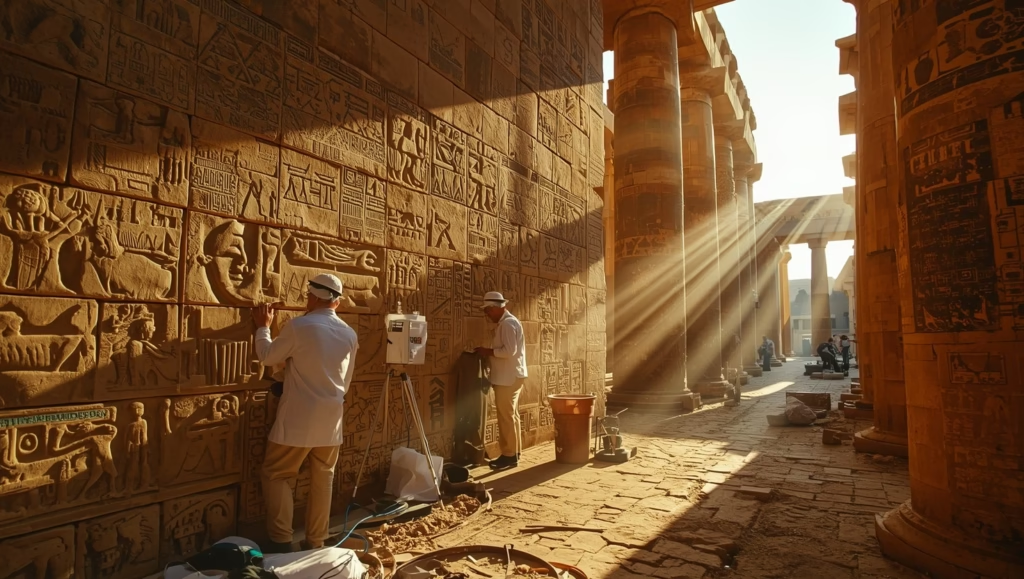
The ancient Egyptians established a system of scribes and priests responsible for maintaining religious texts, administrative records, and scientific knowledge. Hieroglyphic writing was a sophisticated system that encoded religious, political, and technical information vital to the civilization’s continuity.
Libraries and educational institutions preserved the vast body of knowledge related to astronomy, medicine, mathematics, and engineering—many of which contributed directly to their architectural and agricultural innovations. This intellectual foundation reflects their commitment to the idea of enduring knowledge, aligning with their overarching goal of building for eternity.
Conclusion

The civilization of Ancient Egypt epitomizes the enduring human quest to transcend mortality through monumental architecture, intricate spirituality, and sustainable societal practices. Egyptians: The River People Who Built for Eternity mastered their environment and spiritual beliefs to create a legacy that continues to inspire awe and admiration. Their relationship with the Nile, their awe-inspiring architecture, their spiritual worldview, and their dedication to immortality reveal a civilization that viewed life, death, and eternity as interconnected rather than separate. This timeless civilization not only built for eternity but also left behind a blueprint for humanity’s eternal pursuit of meaning, legacy, and divine harmony.
✉️ Stay Connected — Subscribe for Weekly Updates
Discover timeless stories, practical wisdom, and beautiful culture — delivered straight to your inbox.
*We only share valuable insights — no spam, ever.


LarryLib
Tháng mười một 10, 2025What’s up everyone! If you’re keen on figuring out your right color season, tools like the open color analysis quiz and AI color analysis can be super helpful. Figuring out whether you’re a deep summer type, light spring, or something else can truly transform how you pick clothes, makeup, and even hair colour for 2026. There are handy resources to guide you through skin tone analysis and seasonal color palettes that think about everything from yellow undertones to olive skin tones.
For those ready to dive deeper, sites like [url=https://color-analysis-ai.org/]how do i know what season i am[/url] feature free color analysis and seasonal color tests, which can streamline the whole “what’s my color season?” question. Examining palettes like deep summer color palette or cool winter color palette can help you picture which colors work well with your complexion and skin tone charts. Plus, exploring virtual hair color try on tools can reveal the latest hair color trends and what complements you before deciding on a change!