



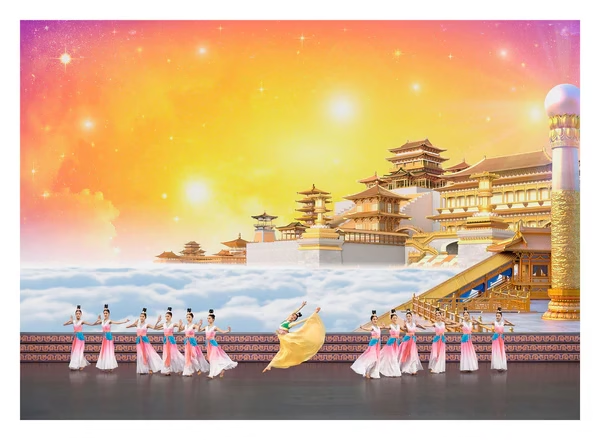
The breathtaking depiction of ancient Chinese architecture in Shen Yun’s backdrops leaves audiences in awe. The majestic celestial palaces and grand temples are unforgettable highlights for many who experience Shen Yun, serving as a source of inspiration to Shen Yun Collections’ designs featuring the same architectural elements.
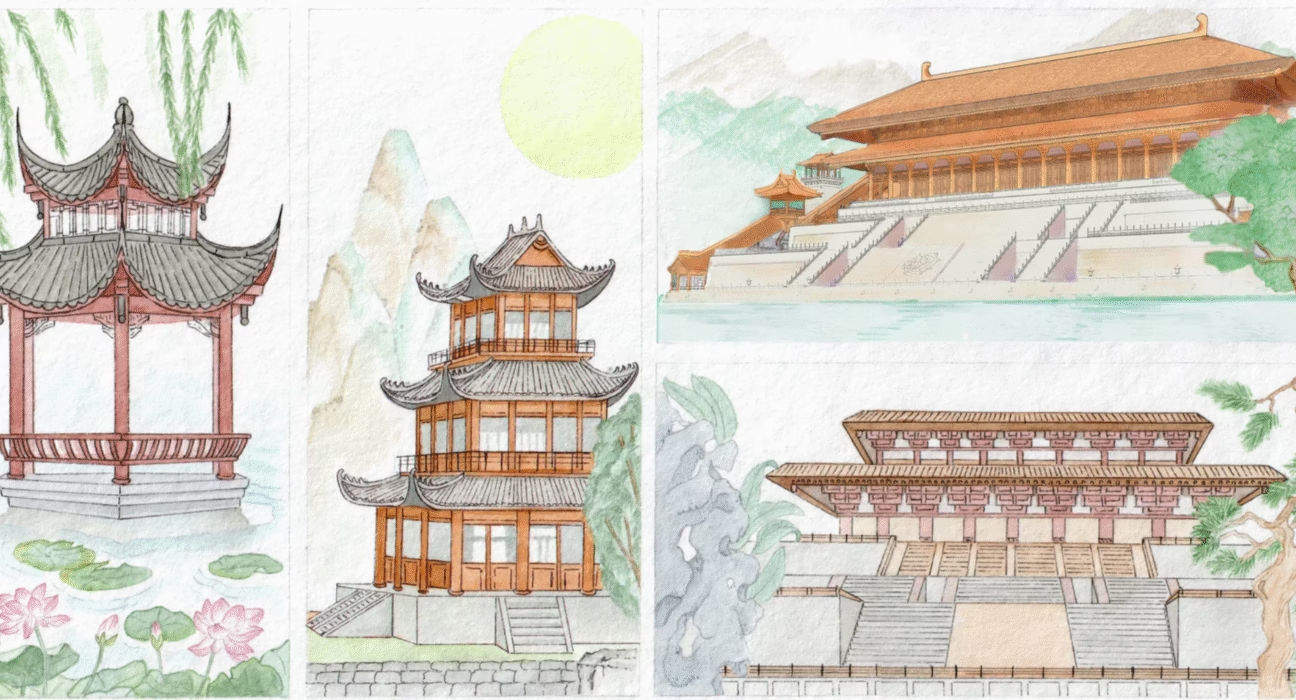
The earliest records of Chinese architecture can be traced back to the Rites of Zhou, the Book of Songs, and the Classic of Mountains and Seas, which describe ethereal pavilions and towers in the celestial realm. These architectural wonders, shaped by time and civilization, still embody the ancient Chinese philosophy of harmony between Heaven and Earth. Each type of structure—pavilions, terraces, towers, and lofts—represents a specific category of ancient Chinese architecture, with distinct forms and cultural significance.
Pavilion(亭 tíng ㄊㄧㄥˊ)
“A pavilion offers a place to pause and gather.”
In ancient times, pavilions were shelters for travelers and one of the most iconic forms of Chinese architecture. Found in gardens, courtyards, or by the water, they served as places for rest, appreciation of the scenery, and conversation.
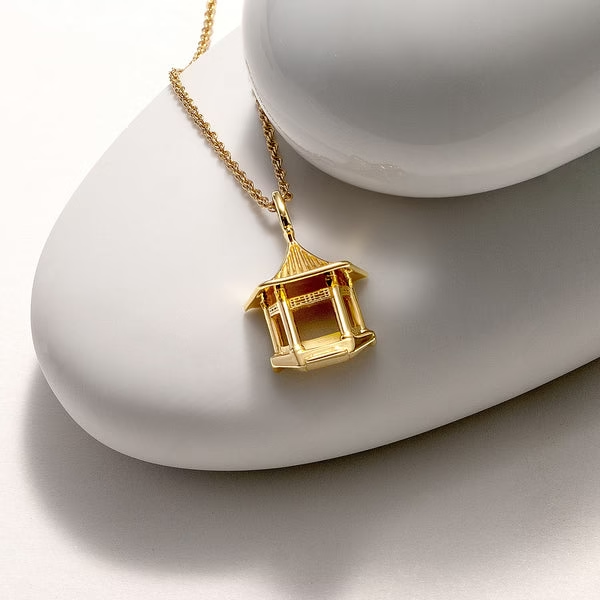
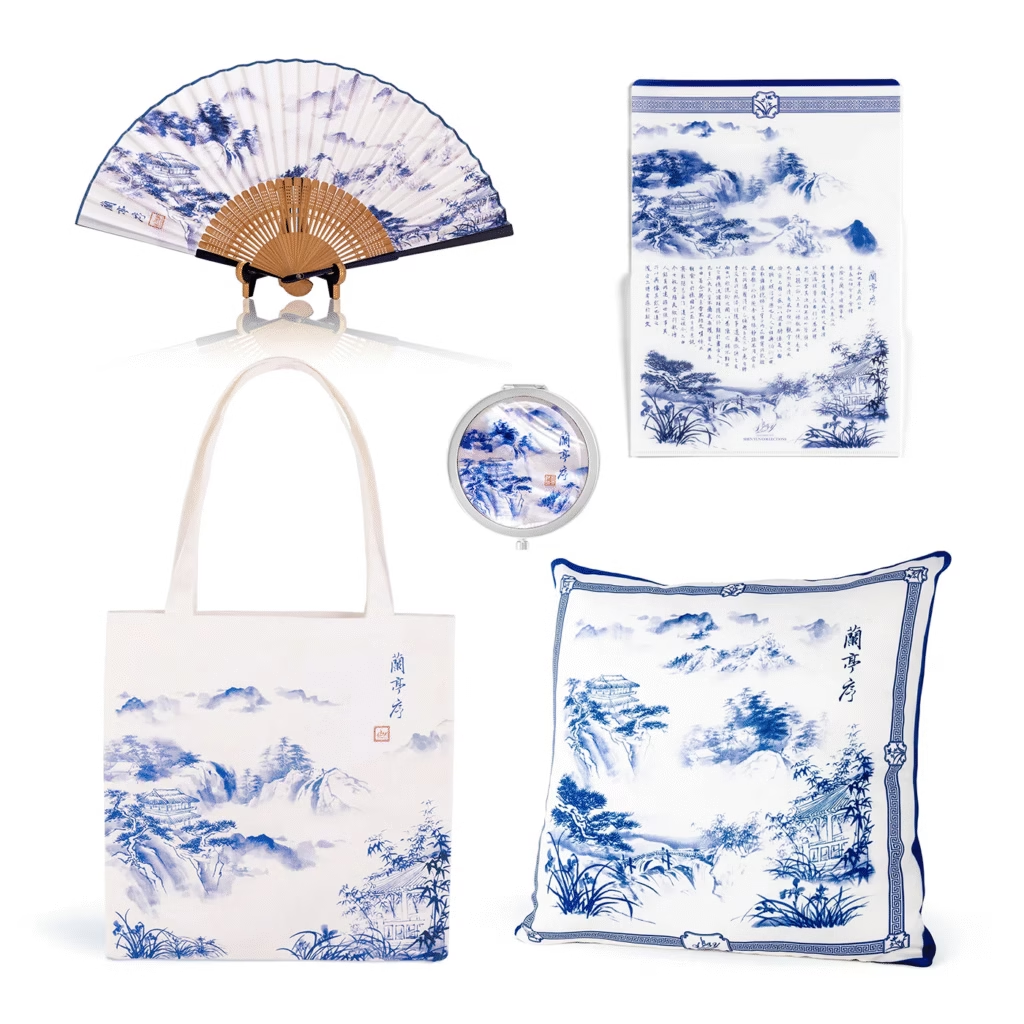
Pavilions are often associated with poetry and nature, symbolizing harmony between humanity and the natural world. An example is the Orchid Pavilion, made famous through Wang Xizhi’s celebrated Preface to the Poems Collected at the Orchid Pavilion.
Terrace(台 tái ㄊㄞˊ)
“A terrace stands tall, offering a view in all directions.”
Terraces are among the oldest forms of garden architecture, with many ancient palaces built on terraces. The Tang Palace featured in Shen Yun’s backdrop in Sleeves of the Tang Palace reflects this tradition.
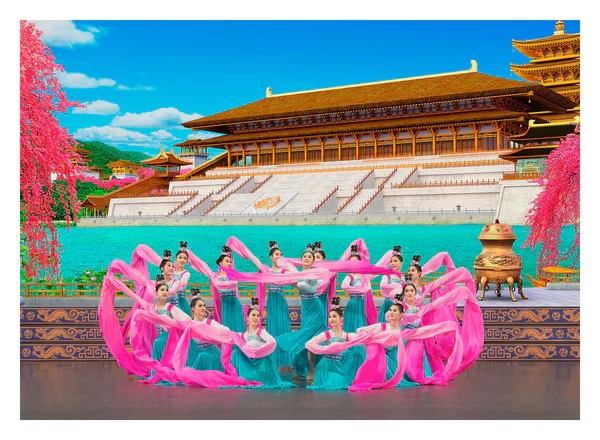
In ancient China, terraces were not only viewing platforms but also spaces for decision-making and instruction, symbolizing authority and wisdom.
Tower(樓 lóu ㄌㄡˊ)
“A tower, a multi-storied building.”
Towers were multi-level structures, often serving as residences or commercial spaces, as seen in the Tang capital depicted in the Shen Yun
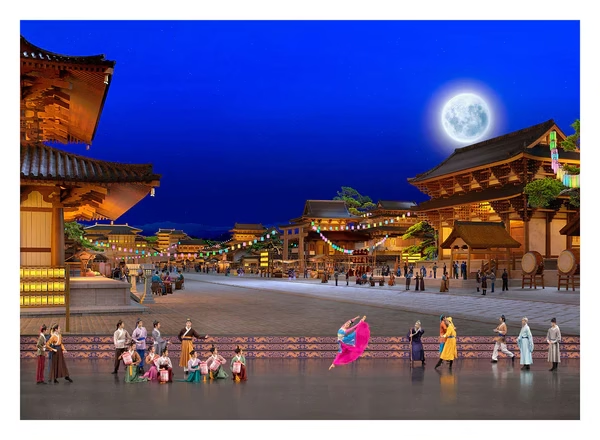
Towers often appear in Chinese poetry, symbolizing a bigger picture and farther-reaching view. For instance, the famous line “To see a thousand miles further, ascend another tower” illustrates their profound imagery.
Loft(閣 gé ㄍㄜˊ)
“A loft stands atop a gate, signifying entry and exit.”
The character 阁 (gé) combines 门 (gate) and 各 (each), reflecting its function as a building constructed above gates, often used for viewing or storage. In Shen Yun’s Elegance of a Majestic Era, the palace’s uppermost loft is a stunning example.
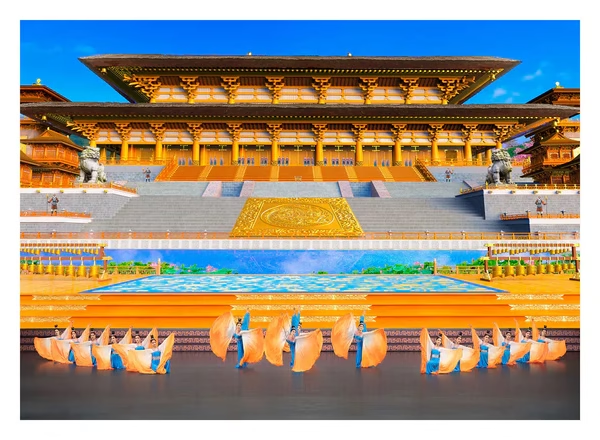
Lofts in Chinese culture are deeply connected to literature, poetry, and scenery. These spaces often became gathering places for scholars to exchange ideas, blending architectural beauty with cultural depth.
Original article: https://www.shenyuncollections.com/blogs/blog/four-types-of-ancient-chinese-architecture-you-should-know?
✉️ Stay Connected — Subscribe for Weekly Updates
Discover timeless stories, practical wisdom, and beautiful culture — delivered straight to your inbox.
*We only share valuable insights — no spam, ever.


888starz_lyPn
Tháng 10 20, 2025With its diverse offerings and reliable support, it is a captivating choice for players.
télécharger 888starz apk android [url=https://888starz-888stars.com/fr/application/]télécharger 888starz apk android[/url]
droversointeru
Tháng 10 20, 2025What’s Happening i’m new to this, I stumbled upon this I have found It absolutely helpful and it has aided me out loads. I hope to contribute & help other users like its helped me. Good job.