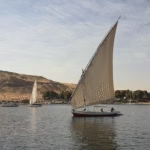




The emergence of ancient civilizations is a fascinating chapter in human history. It’s characterized by extraordinary innovation, societal organization, and cultural development, all rooted in specific regions known as the Four Cradles of Ancient Humanity. These cradles — notably the Nile, Tigris, Indus, and Yellow River — each represent unique environments that fostered early societal advances and profoundly shaped the course of human civilization. Understanding these regions provides insight into how geography can influence societal growth, technological progress, and cultural identity.
The Four Cradles of Ancient Humanity – How the Nile, Tigris, Indus, and Yellow River Shaped Civilizationdemonstrates how nature’s landscapes served as fertile ground for mankind’s earliest innovations. These regions reveal the intricate relationship between environment and civilization, highlighting the importance of geographic resources, ecological stability, and societal adaptability in shaping the ancient world.
The Four Cradles of Ancient Humanity – How the Nile Shaped Civilization
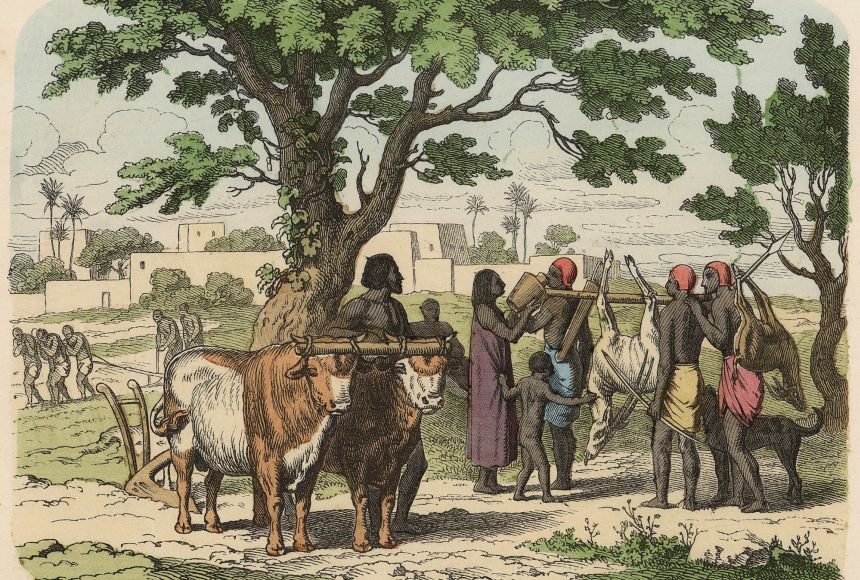
The Nile River, long celebrated as the cradle of Egyptian civilization, occupies a pivotal role in human history. Its predictable flooding cycle and lush floodplains created an environment for the birth of one of the world’s earliest and most enduring societies. The Nile’s influence extended beyond mere sustenance to foster complex social structures, religious beliefs, and technological advancements.
The Nile’s Generous Flooding and Agricultural Prosperity

The annual inundation of the Nile was central to the development of ancient Egypt. This predictable flooding deposited nutrient-rich silt across the riverbanks, transforming barren land into fertile soil ideal for agriculture. Unlike other rivers whose flooding was uncertain or destructive, the Nile’s consistent cycle allowed early Egyptians to plan their planting and harvesting cycles meticulously.
This ecological stability encouraged the development of an efficient agricultural society. The surplus food production freed a segment of the population from subsistence farming, enabling the specialization of labor, craft development, and urbanization. The Nile’s basin thus became a mosaic of villages, towns, and eventually grand cities like Thebes and Memphis, which flourished culturally and economically.
Societal Structures and Religious Beliefs

The prosperity fostered by the Nile translated into sophisticated societal organization. Pharaonic rule emerged as the central authority, blending political power with divine legitimacy — a reflection of the river’s sacred status in Egyptian cosmology. The river was personified as the god Hapy, representing fertility and renewal, anchoring the spiritual life of the society.
Egyptian religion, mythology, and art often centered around the Nile’s life-giving properties. Temples and monuments aligned with the river’s cycle, emphasizing the cultural importance of the natural environment. Additionally, innovations such as irrigation canals, dykes, and basin irrigation systems were developed to maximize the Nile’s potential.
Innovations and Legacy

The Nile served as a natural highway that facilitated trade and cultural exchange both within Egypt and with neighboring regions. Papyrus, for example, was cultivated along the riverbanks and became vital for writing and administration, contributing to Egypt’s bureaucratic and literary achievements.
The ancient Egyptian civilization demonstrated how an environment capable of providing stability, resources, and spiritual meaning could nurture a unique, enduring culture. The Nile’s influence still underscores the importance of strategic geographic positioning and environmental management in the rise of civilizations.
Tigris River
The Tigris River, flowing through the heart of Mesopotamia, significantly contributed to the rise of civilization in the Fertile Crescent. Known for its unpredictable flooding and the fertile alluvial plains it created, the Tigris fostered societies characterized by innovation, early urbanization, and complex political structures.
The Challenges and Opportunities of the Tigris Floods

Unlike the Nile, the Tigris has a less predictable flood pattern. This variability presented challenges for early farmers, requiring the development of sophisticated irrigation systems and flood control measures. Early Mesopotamians built levees, dams, and reservoirs to manage the river’s waters responsibly.
Despite these challenges, the fertility of the Tigris plain allowed for abundant crop cultivation, supporting the rise of city-states such as Sumer, Akkad, and Assyria. This environment fostered a competitive political landscape, with rulers seeking to control resources and expand influence through warfare and diplomacy.
The danger posed by floods also spurred innovations such as writing systems (cuneiform) to record transactions and historical events, a critical step in administrative complexity. The need to organize labor and resources for flood control helped develop early bureaucratic systems that underpin modern civilizations.
The Development of Urban Centers
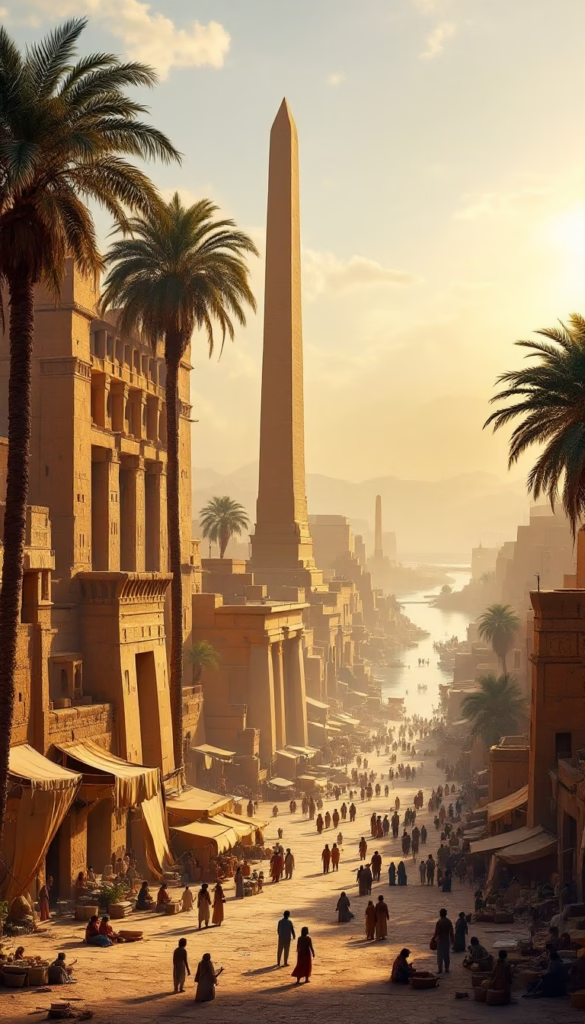
The fertile Tigris basin became home to some of the world’s earliest major urban centers. Uruk, Ur, and Nineveh emerged as hubs of culture, trade, and governance. These cities showcased architectural advances such as ziggurats, palaces, and canals that still inspire admiration today.
Trade routes extended from Mesopotamia to the Indus Valley and beyond, fostering intercultural exchanges that enriched technological and cultural development. The Tigris’s role in connecting different parts of Eurasia fostered a cosmopolitan environment that contributed significantly to the progress of civilization.
Cultural and Technological Innovations
The complex society centered around the Tigris River significantly benefited from technological innovations driven by need. These included the development of the wheel, plow, and early composite bows, which supported agriculture, warfare, and trade. The Sumerians also developed one of the earliest known writing systems, cuneiform, to manage their expanding administrative needs.
Furthermore, religious beliefs often reflected the tumultuous relationship with the river itself, with gods like Enlil personifying the power and unpredictability of nature. The Tigris’s influence in shaping Mesopotamian spirituality and societal structures underscores the importance of environment in cultural evolution.
Indus

The Indus River, flowing through present-day Pakistan and northwest India, nurtured one of the earliest urban civilizations— the Indus Valley Civilization. Characterized by remarkably planned cities, advanced drainage systems, and thriving trade networks, this shade of human history is often overshadowed by Mesopotamia and Egypt but is equally vital.
Urban Planning and Technological Ingenuity
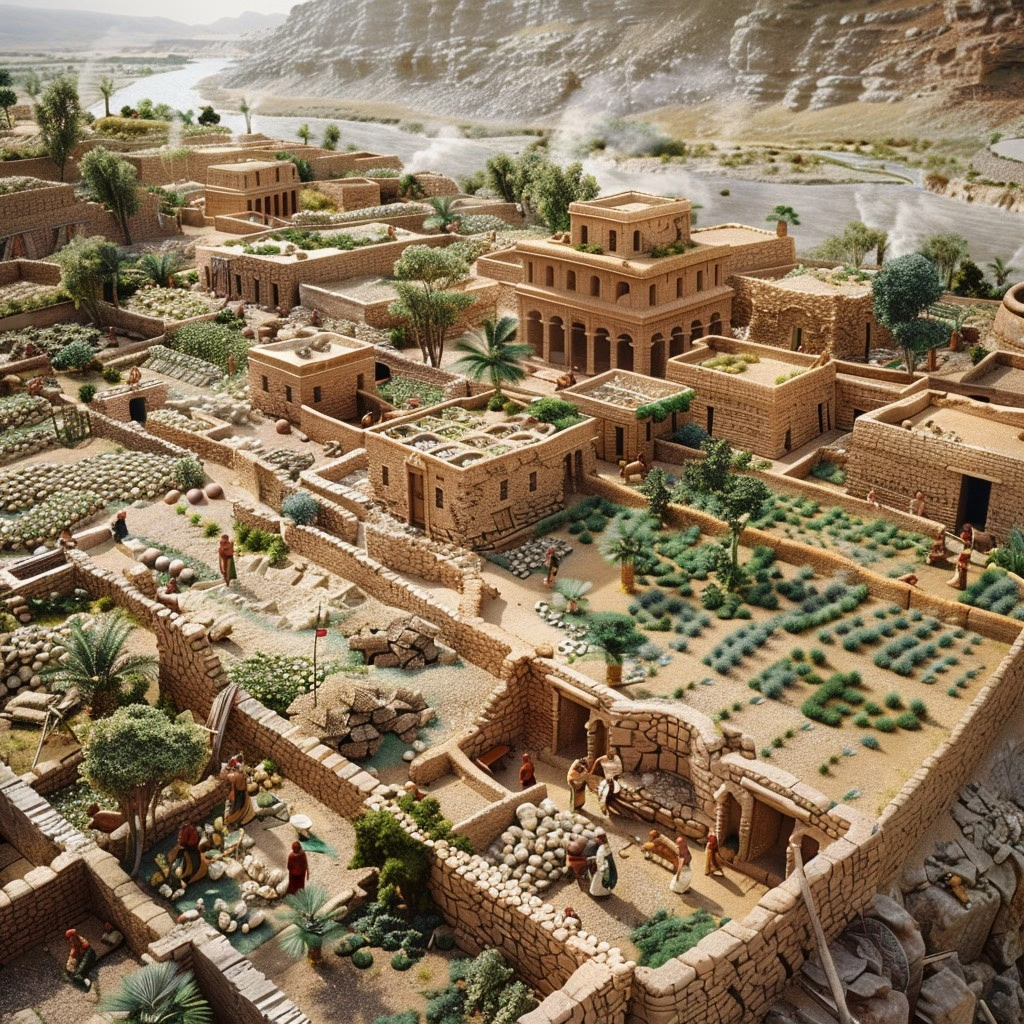
The cities of Mohenjo-daro and Harappa exemplify the Indus Valley Civilization’s sophistication. These urban centers were meticulously planned, with grid-like street layouts and sophisticated drainage systems—a testament to the foresight and engineering capabilities of early Indus peoples.
Access to the Indus River’s annual floods provided the agricultural foundation necessary for supporting dense populations. The consistent water supply and fertile soil allowed for the cultivation of wheat, barley, and other crops, ensuring food security and economic stability.
The technological innovations in drainage, construction, and metallurgy evidenced a highly developed society that prioritized hygiene, urban management, and technological progress—factors that contributed directly to the civilization’s resilience and longevity.
Trade and Cultural Syncretism
The Indus Valley Civilization was a hub of trade, with evidence of contacts with Mesopotamia, Central Asia, and even distant regions like Persia. Goods such as beads, ceramics, and copper tools have been found across widespread territories, illustrating an extensive trade network.
Cultural artifacts reveal a society rich in symbolic and artistic expression. Yet, much about their language remains a mystery, highlighting the enigma that still surrounds this civilization. Despite uncertainties, their influence on neighboring regions indicates the significance of environment-driven innovation.
Environmental Impact and Decline
Recent studies suggest that climate change, river shifts, and overuse of resources contributed to the decline of the Indus civilization around 1900 BCE. The shifting course of the river and possible droughts led to agricultural decline and societal disruption.
The Indus’s environmental resilience—initially enabling urban flourishing—also highlights the delicate balance early societies maintained with their environments. These aspects emphasize the importance of sustainable environmental interactions in the longevity of civilizations.
| Civilization | Main River | Key Features | Major Contributions |
|---|---|---|---|
| Nile | Nile | Predictable flooding, pyramids | writing, engineering, religion |
| Tigris | Tigris | Unpredictable flooding, city-states | irrigation, cuneiform, governance |
| Indus | Indus | Urban planning, drainage systems | metallurgy, trade networks |
| Yellow River | Yellow River | Loess soils, early rice farming | papier-mâché, social organization |
And Yellow River Shaped Civilization
The Yellow River, often called “the Cradle of Chinese Civilization,” played an instrumental role in shaping one of the world’s most enduring cultural traditions. Its fertile floodplains and technological innovations spurred developments that sustained and advanced Chinese society for millennia.
The “Mother River” and Agricultural Foundations
The Yellow River’s frequent floods and rich loess soils created an environment conducive to early farming. The development of millet cultivation laid the agricultural foundation of early Chinese society. The unpredictability of the river’s flow often caused devastating floods, but early Chinese communities learned to adapt, building dikes and drainage systems to control water.
This environment fostered the growth of small-scale villages that eventually united under central authority, leading to the rise of early dynasties such as the Xia, Shang, and Zhou.
The resilience of early societies along the Yellow River exemplifies how human ingenuity can transform environmental challenges into cultural strengths. Their innovations in flood control and irrigation technologies are precursors to later Chinese advancements in engineering and societal organization.
Cultural and Technological Contributions
The Yellow River civilization developed distinctive cultural practices, including the earliest Chinese writing system (oracle bones), philosophies like Confucianism, and advances in metallurgy and ceramics. These innovations demonstrate how environmental conditions foster unique cultural identities and technological progress.
The river’s value extended beyond practical needs; it became a profound symbol of Chinese identity and spiritual life. The concept of harmony with nature, central to Chinese philosophy, likely draws from the river’s complex relationship with early societies.
Environmental Challenges and Their Effects

Frequent flooding occasionally destroyed settlements, leading to societal upheaval. Yet, each disaster prompted technological responses that improved flood management, reflecting a society that learned from adversity.
The environmental dynamics of the Yellow River continue to influence Chinese civilization today, making it a living testament to the power of geography in shaping societal development.
Conclusion
The “The Four Cradles of Ancient Humanity – How the Nile, Tigris, Indus, and Yellow River Shaped Civilization” highlights a profound truth: environment and geography are fundamental to the development of societies. The predictability or unpredictability of water sources, the fertility of floodplains, and the adaptability of early communities shaped political structures, technological innovations, and cultural identities. These regions remain testaments to human ingenuity in harnessing natural resources, transforming landscapes into advancements, and laying foundations for future civilizations. Their legacies continue to inform our understanding of how environments influence societal resilience and cultural depth.
✉️ Stay Connected — Subscribe for Weekly Updates
Discover timeless stories, practical wisdom, and beautiful culture — delivered straight to your inbox.
*We only share valuable insights — no spam, ever.